
Writing a promotional post can take hours when product information is incomplete. Answering a customer can become a lengthy task when prices, service conditions, and delivery details are scattered across different conversations. Meeting notes can remain untouched in a document because no one has translated them into clear responsibilities and deadlines.
These everyday challenges offer a useful starting point for AI adoption. For businesses in Cambodia, the first question is which task needs improvement, what reliable information is available, and how the team will judge whether AI has helped.
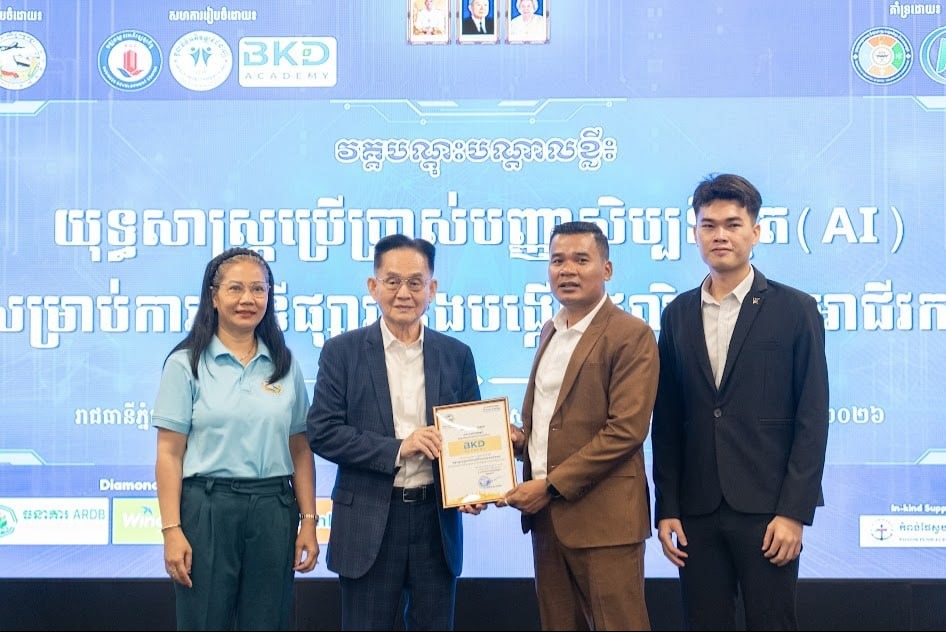
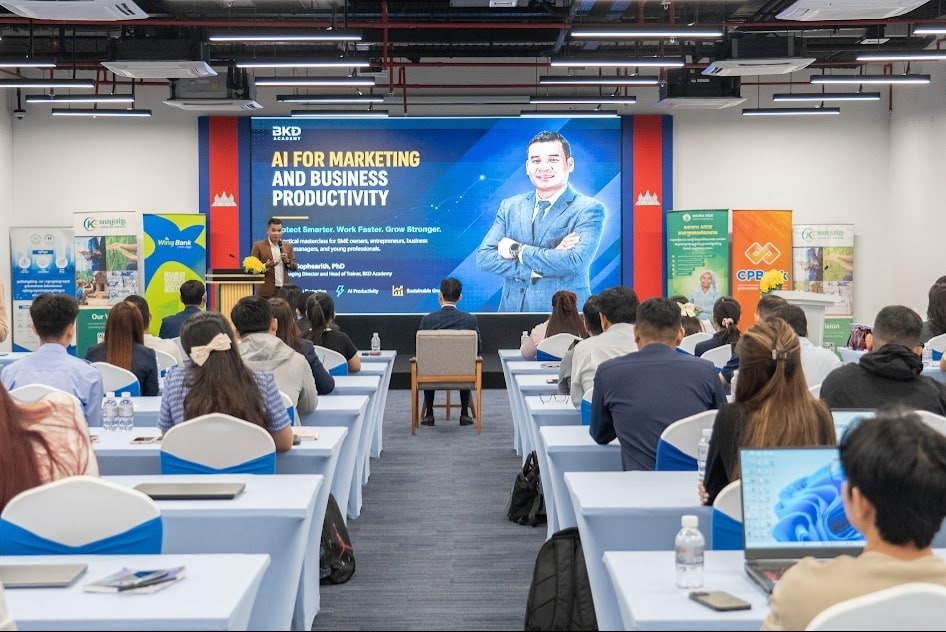
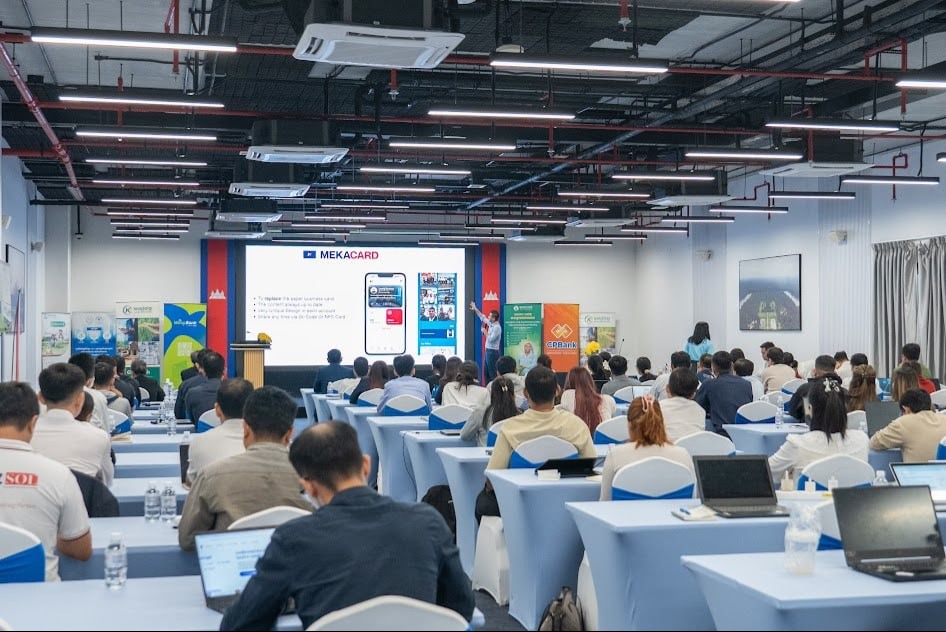
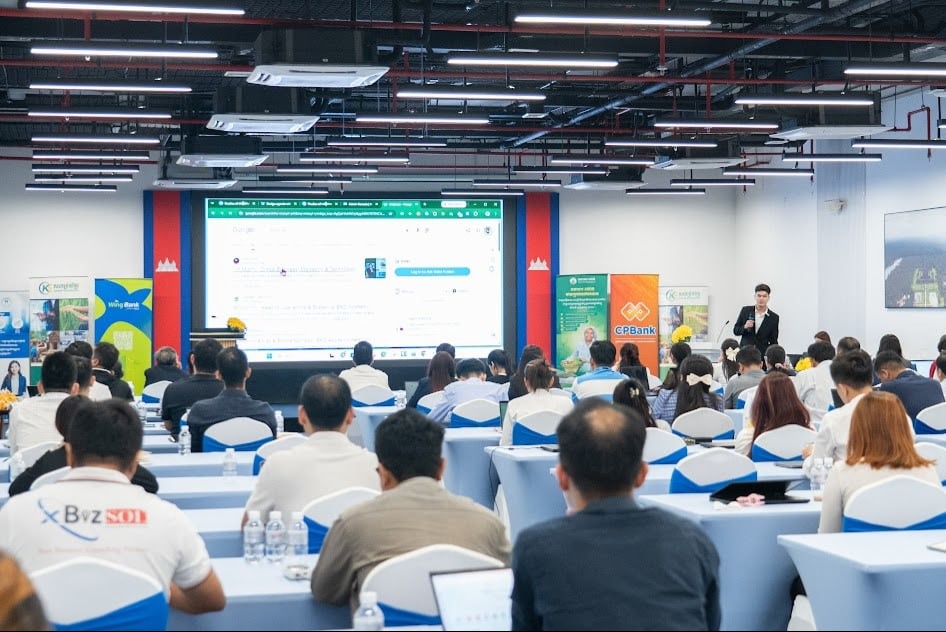
This practical perspective emerged from the training programme, “Strategies for Using Artificial Intelligence (AI) for Marketing and Business Productivity,” organised on 11 November 2026 by BKD Academy in collaboration with the Cambodia Chamber of Commerce, the Business Development Center, and the Skills Development Fund (SDF). Approximately 80 participants attended.
The programme was presided over by H.E. Oknha Nguon Meng Tech, Director General of the Cambodia Chamber of Commerce, with the participation of Mr. Yorn Sophearith, Executive Director and Head Trainer at BKD Academy. Its topics connected AI with practical marketing tasks, customer communication, workflow automation, and responsible business use.

Start with the business problem
Knowing the names of several AI tools is useful, but choosing a suitable tool requires a clear understanding of the task. Businesses should identify where work slows down, where errors recur, and what a satisfactory result should look like.
For example, a marketing team struggling to prepare weekly content should first examine the cause. It may lack ideas, approved product information, or a clear review process. AI can assist with drafting, but incomplete information and unclear approval responsibilities still require attention.
Starting with one defined task makes the learning process easier to manage. It gives the team a specific result to review and a practical basis for deciding whether to continue, adjust, or expand its use.
Give AI the context it needs
Writing effective prompts is a way of expressing a business task clearly. A request such as “write a promotional post” leaves many questions unanswered. A useful brief identifies the product, intended audience, approved facts, tone, format, and desired customer action.
A food business, for example, could prepare its confirmed menu details, prices, location, opening hours, and delivery conditions before requesting a draft. A team member would then review the result for accuracy, brand consistency, and suitability for customers.
For Khmer content, editorial review is particularly important. The wording must be natural, the meaning clear, and the tone appropriate to the audience. A draft becomes useful business content through informed human review.
Organise information and assign responsibility
The training materials also emphasised organised files, consistent naming practices, and clear ownership. These foundations matter because teams need to know which information is current and which documents are approved for use.
If one employee works from an outdated price list while another uses the latest version, AI-assisted replies can become inconsistent. A shared information source, a clear update process, and identifiable document versions help teams work from the same facts.
Responsibilities should also be explicit. Someone must prepare the information, someone must review the output, and someone must approve its use. This gives AI-assisted work a clear route from draft to action.
Set boundaries for AI assistants and chatbots
AI assistants and chatbots were among the programme’s topics. A practical starting point is to organise answers to questions customers regularly ask, such as opening hours, locations, services, and ordering procedures.
Before using those answers in an AI-assisted workflow, the business should approve their content and assign responsibility for updates. It should also define when a question needs human attention.
Complaints, unclear requests, and exceptions requiring approval should have an escalation process. These boundaries help preserve accuracy and ensure that customers can reach a person when a situation requires judgment or understanding.
Measure productivity through time and quality
A useful principle in the training materials was to test one task before expanding the workflow. The team records its current approach, the time required, and common errors. It then uses AI on the same type of task, reviews the result, and compares the two approaches.
The comparison should include preparation, prompting, checking, and editing time. A quickly generated draft may still require substantial work before it is ready. Likewise, producing more content has limited value if accuracy or relevance declines.
Suitable early trials could include drafting a weekly content plan, turning meeting notes into assigned actions, or preparing replies from an approved FAQ. Each trial needs a responsible person, a review date, and a clear measure of usefulness.
Make responsible use part of everyday practice
The programme also addressed safety, ethics, and accountability. Before entering information into an AI tool, employees should understand what they are permitted to share and follow their organisation’s information-handling rules.
Confidential business documents and customer information require clear controls. Outputs also need checks for accuracy, appropriate language, and suitability before use.
Training should therefore help employees recognise when to review, revise, or seek guidance. Tool knowledge becomes more useful when supported by working procedures and responsible supervision.
Turn learning into a repeatable improvement
The participation of approximately 80 learners created an opportunity to explore practical AI applications. The longer-term value will depend on how participants test those ideas within their businesses and learn from the results.
A manageable next step is to choose one task, assign an owner, prepare reliable information, and set a review date. If the trial produces useful, consistent results, the team can document the process and consider applying it more widely.
BKD Academy extends its appreciation to the Cambodia Chamber of Commerce, the Business Development Center, the Skills Development Fund (SDF), BizKhmer Media, Khmer Enterprise, and the sponsors, including the Agricultural and Rural Development Bank, Wing Bank (Cambodia) Plc., Cambodia Post Bank Plc., and Phnom Penh Autonomous Port, as well as all participants, for supporting the programme.
For Cambodian businesses, developing AI capability can begin with a simple question: which task could we improve this week? A clear objective, reliable information, human responsibility, and meaningful measurement provide a practical foundation for progress.
BKD Academy will continue contributing to skills development that connects learning with application and responds to industry needs, supporting stronger teams and more competitive Cambodian businesses.
This blog was written by the BKD Academy team (Mr. Yin Mizcyl, Head of Operations, BKD Academy), an organisation focused on training in marketing, digital marketing, marketing technology, and leadership in the digital sector for small and medium-sized enterprises and for developing marketing careers in Cambodia.
Need support with social media marketing, PR campaigns, or growing your food and beverage (F&B) business online? Contact our agency: 🌐 BizKhmer Digital Media — your trusted digital marketing team.
For exclusive Cambodian business trends, business stories, startup insights, and perspectives on Cambodia’s economy, visit our press release website: 🌍 BizKhmer.com